
HAIR AND SCALP CONCERN
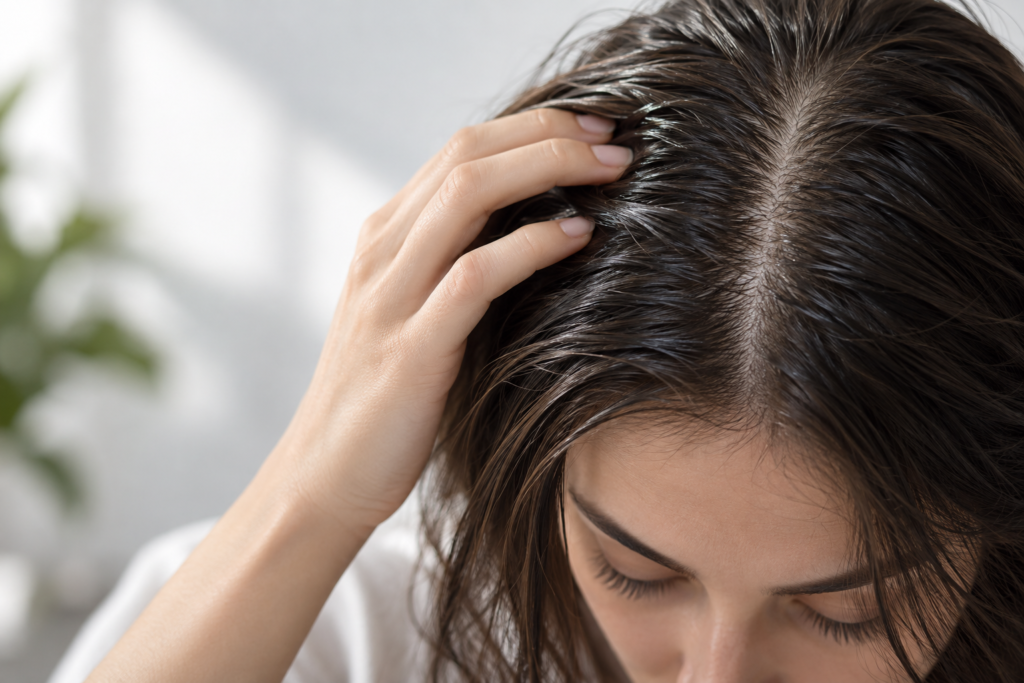
Hair close to the scalp may look darker, shinier or clumped as surface oil and other material accumulate. Appearance alone does not measure sebum production.
The scalp or roots may become oily again after cleansing. The interval varies widely and does not create a diagnostic threshold.
Some people notice visible shine or a slick or coated feeling at the scalp. Sweat, products and sebum can contribute to this surface impression.
Oiliness may occur alongside flaking, itch, redness or discomfort. These accompanying findings broaden the possible context and cannot be interpreted from oiliness alone.
An illness, high fever, surgery, childbirth, major physiological or psychological stress, restrictive nutrition, medication change, or another relevant event may affect the hair cycle in some people.
The change in follicle cycling may occur before increased shedding becomes visible. The interval varies and does not establish the cause on its own.
In telogen effluvium, increased shedding may become noticeable months after a triggering event.
| Oily Scalp Observations | Product Buildup or Other Scalp Changes | |
|---|---|---|
| Surface appearance | Shine or greasiness may be most noticeable at the scalp and near the roots as sebum and surface material accumulate. | Residue can coat the scalp or hair and may look greasy, waxy, dull or clumped; appearance depends on the product and hair characteristics. |
| Timing and context | The pattern may vary with individual sebaceous activity, life stage, activity, environment and the interval since washing. | A change may follow a new styling product, dry shampoo, conditioner placement, incomplete rinsing or several routine changes. |
| Accompanying findings | Oiliness without marked symptoms may reflect normal variation, but flakes, itch, redness or discomfort add clinically relevant context. | Flaking, redness, itch, pain or crusting may indicate irritation or another scalp disorder rather than simple residue. |
| What observation cannot show | Visible oiliness cannot establish abnormal sebum production, a hormonal disorder, dandruff or seborrheic dermatitis. | A coated appearance cannot by itself identify the material present or exclude an inflammatory, infectious or other scalp condition. |
Important: These observations can help organize what you notice, but they cannot determine whether the appearance reflects sebum, sweat, product residue, dandruff, seborrheic dermatitis or another scalp condition.
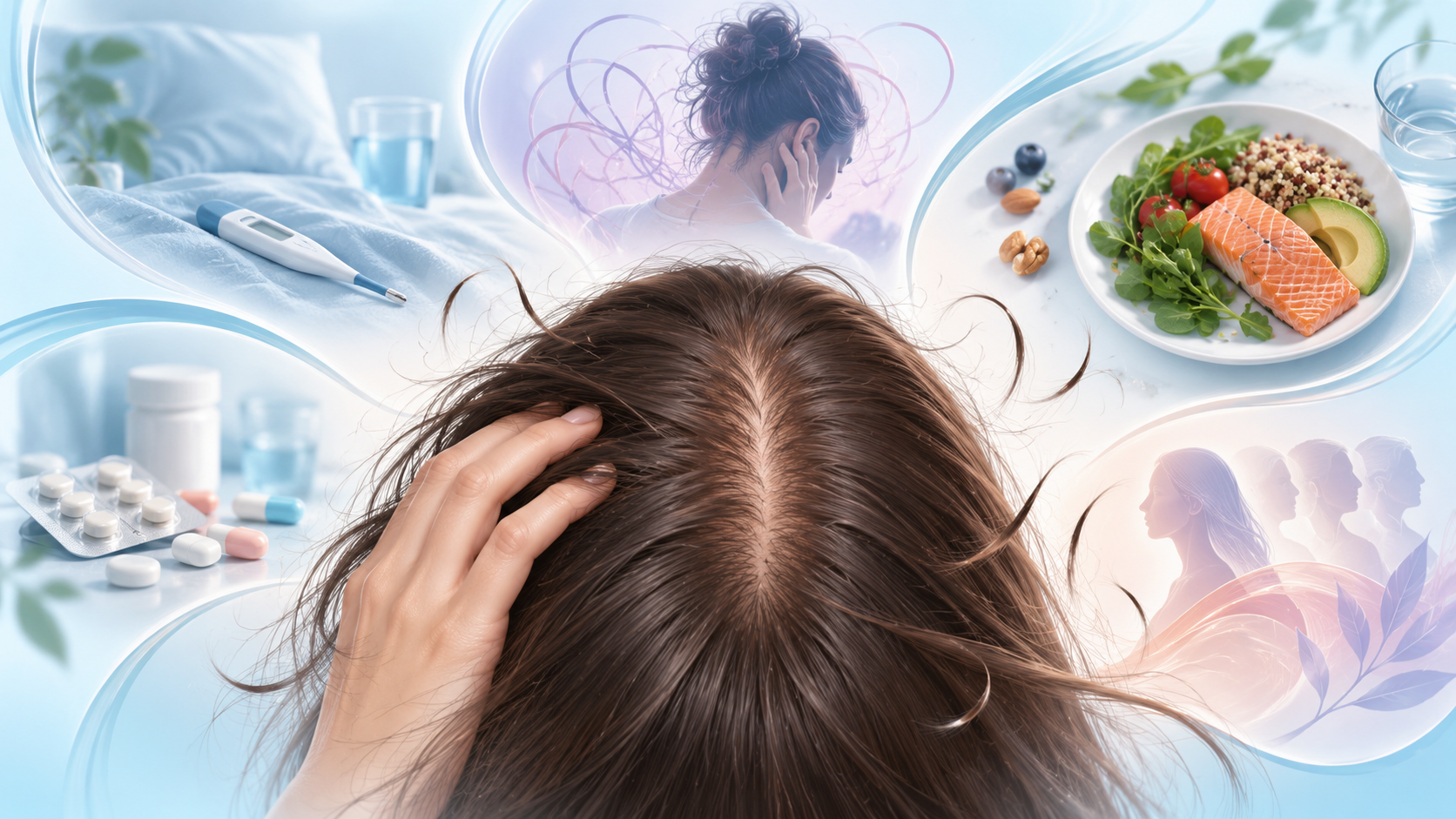
These factors may provide useful context, but none establishes the cause of hair shedding on its own.
Sebum is a normal skin-surface lipid mixture, and the amount and perception of oiliness vary substantially between people.
Current evidence supports
Sebaceous glands produce sebum as part of normal skin biology. Measured output and visible oiliness vary by body site and individual, so a greasy appearance does not by itself prove abnormal production.
Individual variation is expected; there is no universal visual threshold for an “oily scalp.”
Sebaceous activity is biologically regulated and changes across life stages, but scalp appearance cannot identify a person’s hormonal state.
Current evidence supports
Sebaceous glands respond to androgen signalling, and activity commonly changes around puberty and across adulthood. This general biology should not be converted into a self-diagnosis of hormonal excess.
A hormonal disorder requires clinical context and cannot be inferred from scalp oiliness alone.
The visible pattern depends partly on the interval since cleansing and on material applied to or left on the scalp and hair.
Current evidence suggests
Washing interval, product placement, dry shampoo, styling products and incomplete rinsing can change surface appearance. Evidence does not support one universal washing schedule for every scalp and hair type.
Change one routine element at a time when documenting patterns; this is observation guidance, not a treatment schedule.
Moisture, activity and accompanying scalp findings can change how oiliness looks and how it should be interpreted.
Current evidence suggests
Sweat can add moisture without being sebum. When greasiness occurs with flakes, itch, redness, pain or crusting, dandruff, seborrheic dermatitis, irritation or another scalp disorder may need consideration.
Coexistence is not proof of a particular diagnosis.
Visible or perceived oiliness alone cannot establish seborrheic dermatitis, dandruff, a hormonal disorder, an excess-androgen state, poor hygiene, an exact abnormality in sebum production, or the need for a particular treatment. The same surface appearance can be influenced by normal variation, the interval since washing, sweat, hair characteristics, product residue and inflammatory scalp conditions.
Professional assessment can place oiliness in context by considering its time course and distribution; washing and product routine; flaking, itch, redness or inflammation; associated hair changes; skin findings elsewhere; and relevant medications, health history or life-stage changes. These details can help distinguish normal variation and surface buildup from a scalp disorder, but they are not diagnostic instructions for self-assessment.
Sebum is a normal product of sebaceous glands and contributes to the lipid environment at the skin and scalp surface.
Sebaceous activity varies between people and is influenced by biological regulation, including androgen signalling and life stage.
Visible scalp or root oiliness is non-specific and can be affected by time since washing, products, sweat and hair characteristics as well as sebum.
Flaking, itch, redness, pain or crusting alongside oiliness changes the clinical context and may warrant assessment for an inflammatory or other scalp disorder.
Oiliness accompanied by substantial redness, swelling, pain, open or draining areas, or persistent crusting should be assessed promptly because these findings are not explained by oiliness alone.
Seek prompt evaluation when scalp oiliness occurs with sudden or patchy hair loss, broken skin, marked tenderness, or areas that appear scarred or smooth.
A new and substantial change in scalp oiliness together with broader skin changes, medication changes or other health symptoms is appropriate for routine professional review.
Routine assessment may help when the pattern persists, repeatedly returns, causes ongoing concern, or remains difficult to separate from product buildup, dandruff or another scalp condition despite a consistent gentle routine.
A conservative starting point is to document when and where oiliness appears, the interval since washing, recent activity and products used on the scalp or hair. Keep routine changes limited so patterns remain interpretable, use ordinary gentle scalp care, and seek professional assessment when the change is persistent, symptomatic, inflammatory, unexplained or associated with hair loss or other concerning findings. This guidance does not prescribe a medicated product or individualized washing schedule.
Answer a structured set of questions about your hair, scalp, and general history. NoviqCare organizes evidence-informed information around your answers to help you understand what may be relevant and what to discuss with a healthcare professional. This is an educational tool, not a diagnostic test, and it does not replace professional medical care.
Start the guided assessmentNo. Oiliness reflects normal sebum biology plus the interval since washing, activity, hair characteristics and products on the scalp or hair. Routine can influence appearance, but oiliness alone is not evidence of poor hygiene.
No. Oiliness can occur on its own, and it can coexist with flaking or inflammatory conditions. Dandruff and seborrheic dermatitis involve additional clinical context, so visible grease or shine alone cannot establish either condition.
Professional evaluation may help when oiliness is persistent, suddenly different, difficult to explain, or accompanied by significant flakes, itch, redness, pain, crusting, drainage, hair loss or changes elsewhere on the skin.
NoviqCare provides evidence-informed education and decision support for hair and scalp concerns. It is not a medical clinic. It does not diagnose conditions, provide treatment or prescriptions, or offer professional medical advice, and it is not a substitute for care from a qualified healthcare professional. Using this site does not create a doctor–patient or other healthcare-provider relationship.
The information here, including anything produced by the NoviqCare assessment, is general and educational. It does not diagnose your condition, identify its cause, or tell you which treatment is right for you, and it may not apply to your individual circumstances.
Please speak with a physician, dermatologist, pharmacist, or other qualified healthcare professional about your own situation, including before starting, stopping, or changing any treatment.
If you have an urgent medical concern, or you think you may be experiencing a medical emergency, call 911 or your local emergency number, or contact a qualified healthcare professional immediately. Do not delay seeking care because of anything you have read here.
NoviqCare content is based on published research, professional guidance, and other reputable sources available at the time of writing. Understanding of hair and scalp health continues to develop, and our content is reviewed and updated as the evidence changes. Where the evidence is limited, uncertain, or mixed, we say so rather than overstate what is known.